


Certified Materials
The production of clothing has a significant impact on the environment. Think of the use of chemicals, energy, agricultural land, and water. We use certified fabrics wherever we can. Certification shows where a fibre comes from and how it was made, checked by an independent party.

Preferred Material List
To be transparent about how we classify our materials, we use a Fiber Matrix. This Fiber Matrix has four categories: Best, Better, Preferred, and Conventional. We use this tool to make better material choices.
Our List of Preferred Materials is based on Modint’s* preferred material list. A key aspect of this list is the evaluation of materials based on a circular model.

* Modint is the Dutch trade association for fashion, textiles, and interior design. It supports companies with advice, advocacy, and services in the fields of sustainability, trade, innovation, and responsible business.
Circular Production
We cannot deny that the impact of the fashion industry is uge. Something has to change in the way we make clothing all over the world. Circulair production is a way to create clothing by using material that already exists (textile waste), to prevent exhausting of resources of the planet.
Ideally, we would produce everything in a fully circular way, but that isn't possible just yet. Today's technologies are not yet fully developed, and the circular materials that do exist still need to be blended with other materials to make high-quality garments. Because we want to be part of the transition as soon as possible without compromising on quality, we have partnered with CIRCULOSE®





Animal Welfare
At King Louie, we highly value animal welfare. That’s why we have an Animal Welfare Policy that sets strict guidelines for the use of animal-derived materials.
Leather
The leather used by King Louie comes from Leather Working Group (LWG)–certified manufacturers. This organization focuses on reducing the environmental impact of leather production.
Wool
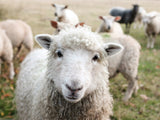
The wool we use comes from spinning mills that are certified by independent parties. However, this certification does not cover the entire supply chain in every case, which means the origin of the wool and compliance with animal welfare standards have not been independently verified at every stage. In line with our Animal Welfare Policy, we are working towards greater transparency and stronger assurance of animal welfare throughout the entire supply chain.
We're RWS-certified since 2026. Our collections now feauture our first jumpers with RWS-wool and we would love to expand this in the upcoming years. The Responsible Wool Standard (RWS) sets strict requirements for sheep welfare and responsible land management, and ensures certified wool is traceable throughout the entire supply chain.

Ambitions
Every year, we aim to increase the percentage of preferred materials in our collection by 5%. We are on the right track with 77% in 2025, but we still use a fair amount of conventional materials in products like jackets and suits. To make improvements in these product categories, we are exploring deadstock materials and the use of recycled yarns as an alternative to conventional ones.
Certificates & Partnerships
We believe it’s important to minimize the environmental impact of our clothing production. The labels of the organic or recycled cotton materials we use can be found on our product pages.

The Global Organic Textile Standard (GOTS) is an international standard for organic textile. We are GOTS certified, CU851623. Only products which carry the GOTS label and claim are certified.

Products certified to the Organic Content Standard (OCS 100) contain between 95-100% organically grown cotton that has been independently verified at each stage of the supply chain, from source to final product. King Louie is OCS certified, CU851623. Only products which carry the OCS label and claim are certified.
Products certified to the Organic Content Standard (OCS Blended) contain between 5-94% organically grown cotton that has been independently verified at each stage of the supply chain, from source to final product. King Louie is OCS certified, CU851623. Only the products which carry the OCS label and claim are certified.

Leather Working Group (LWG) is an organization focused on the environmental impact of leather production. In order to become LWG certified, manufacturers must implement special programs for energy use and wastewater. The leather used by King Louie is Gold Rated (the highest classification).

The Global Recycled Standard (GRS) verifies the recycled content of a product and sets requirements for the social and environmental aspects of its production. A product carrying the GRS label contains at least 50% recycled material. King Louie is GRS-certified, CU851623. Only products with the GRS label and claim are certified.

LENZING™ ECOVERO™ viscose is an alternative for the standard viscose. It's made from wood originating from certified and verified resources. According to Lenzing, the chemicals that are being used in production are recycled in the production process causing up to 50% lower emissions and water impact compared to generic viscose.
We use TENCEL™ Lyocell and TENCEL™ Modal fibres. Both are made from wood, a renewable raw material, from certified and controlled sources

The Responsible Wool Standard (RWS) is a standard developed by Textile Exchange that sets requirements for animal welfare and responsible land management on certified farms. In addition, RWS ensures the traceability of certified wool throughout the entire supply chain. Certified by Control Union, CU 851623.
* Results based on LCS standards (ISO14040/44) and available via Higg MSI (Version 3.7)
* LENZING™ ECOVERO™ viscose are trademarks of Lenzing AG.